What Does Berdan Primed Mean?
Image source: Bing (Web (fair-use with source credit))
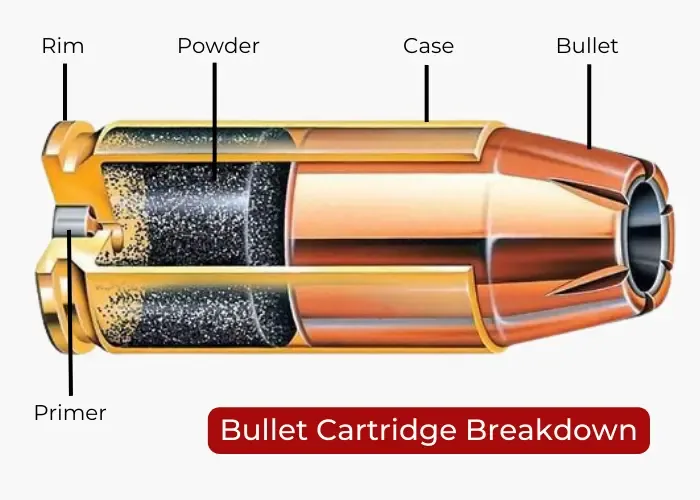
What does berdan primed mean? It refers to a specific type of cartridge case design where the primer pocket has an integrated anvil. This means the primer itself contains the anvil, which is struck by the firing pin to ignite the propellant.
This design is common in many older military surplus cartridges and some European-made ammunition. Unlike the more prevalent Boxer priming system, which uses a separate anvil seated in the case head, Berdan priming requires a slightly different approach for handloaders, particularly when it comes to removing spent primers.
Quick Answer
Berdan primed cases have primers with built-in anvils. This design differs from Boxer priming, which uses a separate anvil in the case head. Removing spent Berdan primers requires specialized tools due to the integrated anvil.
Seeing Berdan Priming: The Key Visual Differences
Understanding what Berdan primed means really clicks when you can see the physical differences in the case head. While you can't usually see the integrated anvil without removing the primer, the shape of the primer pocket itself is a major giveaway. This is where visuals truly help to grasp the concept, showing you exactly what to look for.
Identifying the Berdan Primer Pocket
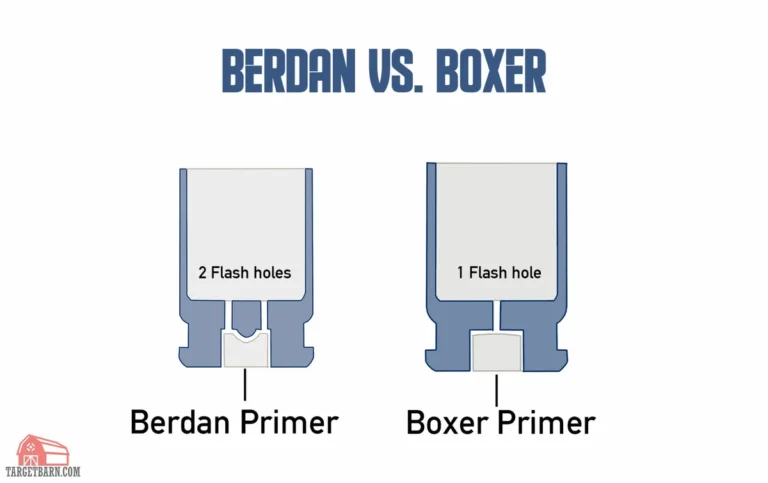
The most obvious sign of a Berdan primed case is the primer pocket's construction. Instead of a single, central hole for a separate anvil (like in Boxer-primed cases), Berdan pockets typically have two small vent holes on either side of a raised dome or nipple in the center. This dome is where the primer's internal anvil is designed to seat and strike.
The spent primer material can sometimes be harder to push out cleanly because it's crimped around this central dome.
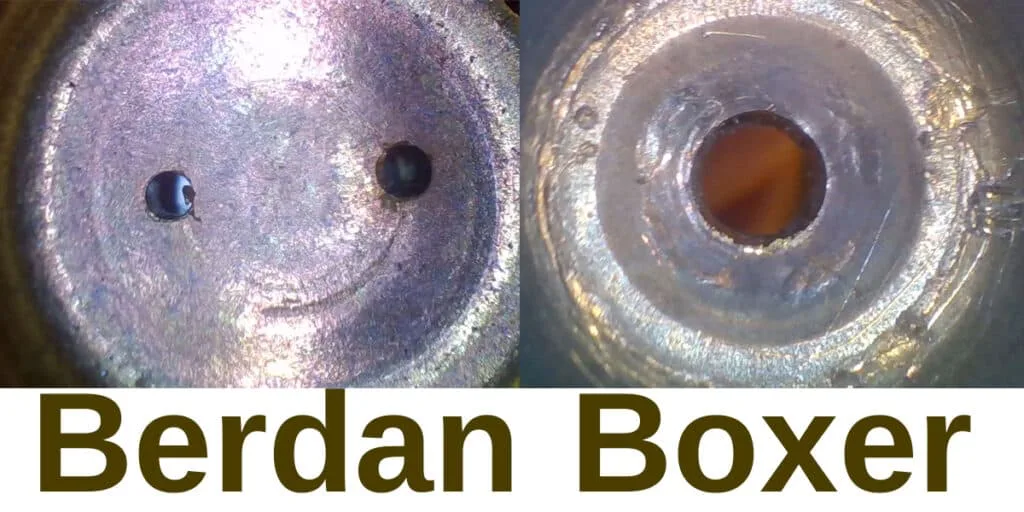
Image source: Bing (Web (fair-use with source credit))
The Integrated Anvil: How It Works
In a Berdan primed case, the primer assembly is a bit more self-contained. The primer cup itself has a small, built-in anvil. When the firing pin hits the primer, it crushes the primer cup down onto this internal anvil, igniting the priming compound.
This contrasts with Boxer priming, where the firing pin hits the primer, which then crushes against the separate anvil seated in the case head. This difference is crucial for reloading, as it dictates the tools and methods needed to remove the spent primer.
The Big Challenge: Removing Berdan Primers
Reloading ammunition offers a great way to save money and tailor loads precisely, but it comes with its own set of challenges. One of the most significant hurdles for many handloaders is dealing with Berdan primed brass. It's not impossible, but it definitely requires more effort and specific tools than working with the more common Boxer primed cases.
Why It's Tricky for Reloaders
The main difficulty in removing spent Berdan primers stems from that integrated anvil. In Boxer primed cases, the anvil is a loose piece within the primer pocket. A standard decapping die simply pushes the primer and its anvil out of the case.
With Berdan cases, the primer is crimped or swaged around the central dome inside the case head, making it much harder to push out. If you try to force it with a standard decapping pin, you're likely to bend or break the pin, or worse, damage the case itself.
Specialized Tools You Might Need
Because standard decapping dies won't cut it for Berdan primers, you'll need specialized equipment. Several types of Berdan decapping tools are available. Some work by pushing the primer out from the inside of the case, often using a very thin, strong rod that passes through the case's flash hole and levers against the primer's edge or the internal anvil.
Others involve using a hydraulic system or a special press-mounted tool that applies significant force to push the primer cup free. The success rate can vary depending on the specific case and the tool used.
Why Reloaders Deal With Berdan Primed Brass Anyway
Even with the added hassle, many reloaders still end up working with Berdan primed brass. The primary reason boils down to availability and cost, especially for certain calibers. If you shoot a lot of surplus military ammunition, or certain European calibers, you might find that Berdan primed brass is what's readily available and more affordable on the surplus market.
Historical & Military Cartridge Use
Many older military cartridges, particularly those produced before or during major global conflicts, often utilized Berdan primers. This includes calibers like 7.62x54R, 8mm Mauser, and some variants of 7.62 NATO. Manufacturers often chose Berdan primers for their perceived robustness and resistance to backing out under heavy recoil, a critical factor in military applications.
Specific Ammunition Types
Certain modern ammunition types also still employ Berdan primers. This can include some hunting rounds from European manufacturers or specialized cartridges. While Boxer primed brass is more common in North America and for most commercial sporting ammunition, Berdan primed cases remain a significant part of the global ammunition landscape.
If you frequently shoot calibers where Berdan primed brass is prevalent, learning to reload it becomes a practical necessity.
Berdan vs. Boxer: What's the Real Trade-Off?
When you're new to reloading, understanding the difference between Berdan and Boxer priming is key. Both systems achieve the same goal, igniting the gunpowder, but they do it in fundamentally different ways, which affects everything from case preparation to the tools you'll need. It's not really a matter of one being "better," but rather understanding their distinct characteristics and how they fit into the reloading process.
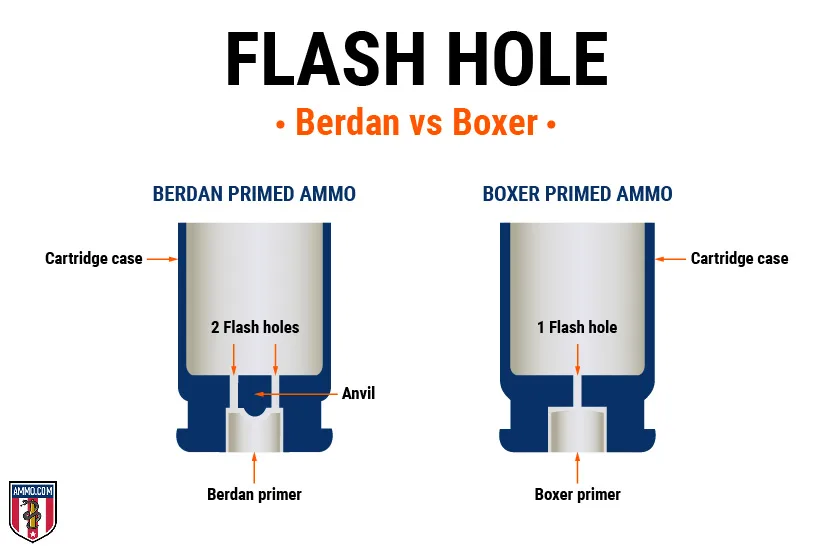
Image source: Bing (Web (fair-use with source credit))
Primer Pocket Design Differences
The core difference lies in the primer pocket's construction.
- Boxer Primed Cases: These have a single, central primer pocket with a separate anvil that sits loose at the bottom. When the firing pin strikes the primer, the primer cup is forced down onto this anvil, creating the spark.
- Berdan Primed Cases: These have a primer pocket with a raised dome or nipple in the center, and typically two small vent holes on either side of it. The anvil is an integral part of the primer itself. The primer is essentially crimped or staked around this dome.
Ease of Reloading
This is where the biggest trade-off for reloaders becomes apparent.
- Boxer Primed Cases: Reloading Boxer primed cases is generally straightforward. Spent primers are easily pushed out with a standard decapping die. New primers are then seated back into the pocket using a priming tool.
- Berdan Primed Cases: Reloading Berdan primed cases is considerably more challenging. Removing the spent primer requires specialized decapping tools because of the integrated anvil and often a crimp or stake. Priming them also requires specific tools that can seat the primer against the case's internal anvil.
Durability & Seal
Historically, Berdan primers were sometimes favored in military applications for their robustness. The integrated anvil and the way the primer is seated can provide a very secure seal, making them less prone to popping out under high pressure or extreme conditions. However, modern Boxer primers and manufacturing techniques have largely closed this gap for most sporting and tactical applications.
For the average shooter or reloader, the difference in seal integrity is usually not a deciding factor.
Getting the Job Done: Reloading Berdan Primed Cases
If you've decided to reload Berdan primed brass, knowing the process is key to avoiding frustration and potential damage. It’s a skill that separates many reloaders from simply buying new ammunition. The core difference lies in how you tackle the spent primer, and then how you seat a new one.
This isn't a quick swap; it requires patience and the right tools.
The Decapping Process: A Closer Look
Removing a spent Berdan primer is the first major hurdle. Standard decapping dies, which are common for Boxer primed brass, won't work here. They are designed to push a primer and its loose anvil out.
For Berdan cases, you'll need a tool that can either lever the primer out from the inside through the flash hole or physically press it out using specialized dies. Some reloaders opt for hydraulic decapping, which uses water pressure to pop the primer free. Others use a rod that fits through the flash hole, with a tip designed to engage the inside of the primer cup or the central dome, allowing you to lever it out.
Priming Berdan Cases: What You Need to Know
Once the spent primer is out and the pocket is clean, you can move on to priming. This also requires specific tools. You can't just use a standard priming tool designed for Boxer pockets.
Many specialized tools for Berdan priming work by seating the new primer against the raised dome within the case head. Some tools use a lever action to push the primer into place, while others might be press-mounted. It's crucial to ensure the primer is seated correctly and uniformly to prevent ignition issues.
Common Mistakes When Working With Berdan Primed Brass
Even with the right tools, working with Berdan primed brass can lead to mistakes if you're not careful. The most frequent error is trying to use standard reloading equipment designed for Boxer primed cases. This can quickly lead to broken decapping pins, damaged cases, or an inability to remove the spent primer.
Another common pitfall is not thoroughly cleaning the primer pocket after decapping; debris can prevent a new primer from seating correctly.
Over-enthusiasm with force is also a problem. When decapping, applying too much pressure can deform the case head or damage the flash hole. When priming, forcing a primer that isn't seating smoothly can lead to primer damage or detonation.
Always proceed with steady, controlled pressure, and if something feels wrong, stop and reassess your technique or equipment. Lastly, some reloaders mistakenly believe all brass from certain calibers is uniformly primed, only to find out later that both Berdan and Boxer variants exist.
When to Stick with Boxer Primed Brass
For most reloaders, especially those just starting out, sticking with Boxer primed brass is the path of least resistance. If you're not specifically looking to reload military surplus or certain foreign-manufactured cartridges, you'll find a far wider selection of readily available and easily reloadable brass for most common calibers. The entire process, from decapping to priming, is simpler and requires less specialized, often more expensive, equipment.
Choosing Boxer primed brass means you can use standard reloading dies and priming tools that are widely available and well-documented. It reduces the learning curve and the potential for errors or equipment damage. If your primary goal is to reload for common hunting, sport shooting, or self-defense calibers, and you don't have a specific reason to venture into Berdan-primed territory, then Boxer primed brass is generally the more practical and efficient choice.
Frequently Asked Questions
Is Berdan priming dangerous?
Berdan primers themselves are not inherently more dangerous than Boxer primers. Both contain explosive compounds that ignite when struck. Safe handling practices are essential for any ammunition component.
Can I use regular primers in Berdan cases?
No, you cannot use standard Boxer primers in Berdan primed cases without modification. The primer pockets are designed differently, and the absence of a separate anvil in Berdan cases means standard primers won't function correctly.
Is Berdan primed brass worth reloading?
It can be, especially if the brass is free or very inexpensive, and you have the specialized tools. The primary advantage is cost savings on brass for certain calibers. However, it requires more effort and specialized knowledge.
How do I know if my brass is Berdan primed?
Look at the primer pocket on the case head. Berdan pockets usually have two small vent holes on either side of a central dome, whereas Boxer pockets have a single central hole where a separate anvil would sit.