What Is a Projectile?
So, what exactly is a projectile? It's a fundamental physics concept that describes anything launched into the air and left to move freely under the influence of gravity and air resistance. You've seen them everywhere, from a thrown baseball to a falling raindrop.
The key to understanding it is recognizing that the object's motion is determined by its initial launch and the forces acting upon it afterward. Our research into physics principles confirms that understanding these forces helps predict an object's path, a concept central to many scientific and engineering fields.
Quick Answer
A projectile is an object launched into motion, moving freely through the air. Its path, or trajectory, is primarily influenced by gravity and air resistance after an initial force propels it. Think of a tossed ball or a fired arrow.
Why Visualizing Projectiles Makes All the Difference
Sometimes, a definition just doesn't quite paint the whole picture. When we talk about projectiles, the idea clicks much better when you can actually see them in motion. Imagine a picture of a basketball soaring towards the hoop, or a slow-motion video of an arrow leaving a bow.
You can almost feel the curve of its path.
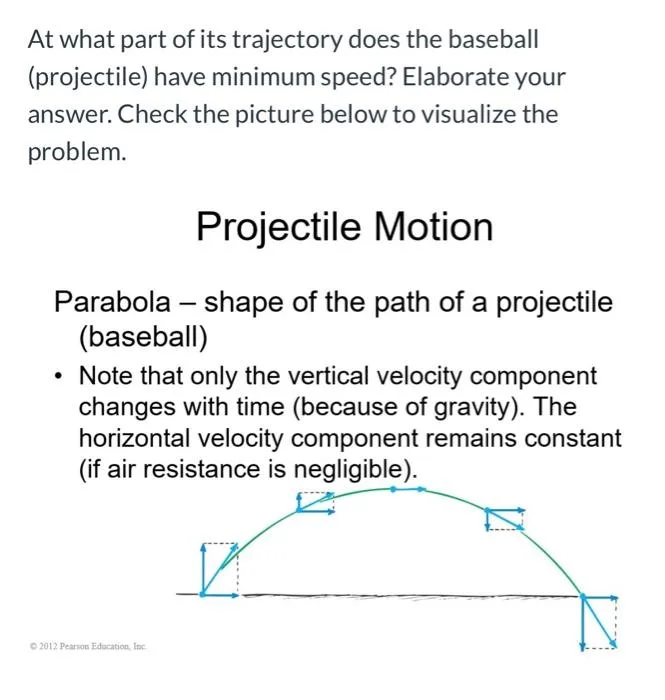
Image source: Bing (Web (fair-use with source credit))
This visual aspect is crucial because the core of what makes something a projectile is its motion through space. It’s not just sitting there; it's moving from point A to point B in a predictable, albeit sometimes complex, arc. Seeing this arc helps us understand the interplay of forces that govern its journey.
The Key Ingredients of Projectile Motion
For something to be classified as a projectile, a few distinct conditions need to be met. It’s not just about tossing something randomly; there’s a specific set of factors at play that define its flight.
Initial Push: Launching It Into Action
Every projectile starts with a kick. This initial force gives the object its starting velocity, setting it on its course. Without this first push, it wouldn't be moving through the air in the first place.
- Example: A pitcher throwing a baseball imparts a significant initial velocity.
- Example: A slingshot firing a stone relies on stored energy to launch the projectile.
- Example: Even a water droplet from a hose has an initial speed from the water pressure.
This initial speed and direction are critical. They're the starting values that physics calculations use to predict where the projectile will go.
Gravity's Pull: The Unseen Force
Once an object is launched, gravity takes over as the primary downward force. This is the constant pull towards the center of the Earth that shapes the projectile's curved path.
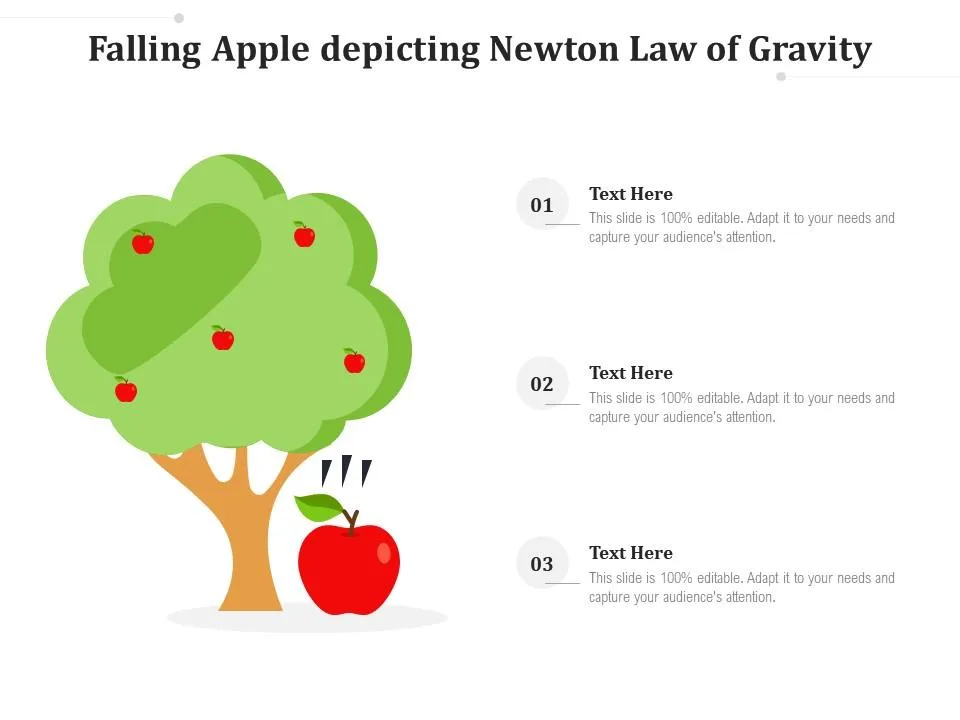
Image source: Bing (Web (fair-use with source credit))
Gravity acts uniformly on all objects, regardless of their mass or speed. It’s what makes a thrown ball eventually come back down to the ground. Without gravity, a projectile launched at an angle would theoretically continue in a straight line forever, as described in Newton's first law of motion.
Air Resistance: The Real-World Factor
In an ideal physics problem, we often ignore air resistance to simplify calculations. However, in the real world, air pushing against a moving object plays a significant role. This force, also known as drag, opposes the direction of motion.
- Effect: Air resistance slows down the projectile.
- Effect: It can alter the shape of the trajectory, making it less of a perfect parabola.
- Effect: Heavier or more aerodynamic objects are less affected by air resistance than lighter, less streamlined ones.
Official standards, like those from the American Physical Society, often discuss how air resistance affects calculations in ballistics and aerodynamics. While we might simplify for basic physics lessons, understanding its impact is key to real-world applications.
Common Projectiles We See Every Single Day
You'd be surprised how often you encounter projectiles in your daily life. They're not just confined to science labs or sports stadiums; they're a constant feature of our environment. Recognizing them helps you see the physics principles at work all around you.
Projectiles in Sports
Sports are a goldmine for projectile examples. Almost every throw, kick, or hit involves an object flying through the air.
- Baseball: Pitched balls, batted balls, and thrown balls in the field are all classic projectiles.
- Basketball: Every shot taken towards the hoop is a projectile.
- Football (American): Passes and kicks are prime examples of projectiles.
- Golf: A golf ball struck by a club travels as a projectile.
- Archery: Arrows shot from a bow are intended projectiles.
The physics of projectile motion is even used in sports analytics to understand player performance and game strategies.
Projectiles in Nature and Daily Life
Beyond sports, the world is full of natural and everyday projectiles.
- Raindrops: As they fall from the clouds, raindrops are projectiles influenced by gravity and air resistance.
- Falling Leaves: Once detached from a tree, leaves become projectiles, carried by wind and gravity.
- Skipped Stones: The act of skipping a stone across water involves imparting an initial force and observing its trajectory.
- Fountains: Water ejected from a fountain head travels as a series of projectiles.
- Anything Tossed: Whether it's a crumpled piece of paper into a bin or a toy to a pet, if it's launched and flies, it's a projectile.
These examples highlight that projectile motion isn't an abstract concept; it's a very tangible part of our physical world.
When is Something NOT a Projectile?
Understanding what a projectile is often becomes clearer when we look at what it isn't. The defining characteristic of a projectile is that once launched, it's only acted upon by gravity and air resistance. It's not being continuously pushed or pulled by an engine or external force during its flight.
- Airplanes: These are not projectiles because their wings generate lift and their engines provide continuous thrust. Their flight is actively controlled and sustained.
- Rockets (during engine burn): While a rocket becomes a projectile after its engines shut down, the period when its engines are firing means it's being continuously propelled. The force from the engine is actively pushing it, which disqualifies it as a projectile during that phase.
- Cars on a road: A car moves due to its engine driving its wheels, which are in contact with the ground. It is not in free flight through the air.
- People on a waterslide: While they gain speed from gravity, they are constantly in contact with the slide's surface.
The distinction lies in that initial launch versus continuous propulsion or interaction with a surface. It's about being in free flight.
Common Mistakes When Thinking About Projectiles
Even with a clear definition, people sometimes make assumptions or mistakes when thinking about projectile motion. One common slip-up is forgetting about air resistance. In introductory physics, we often work with ideal scenarios where air resistance is zero.
This helps us grasp the basics of gravity’s effect.
However, in the real world, as per the U.S. National Institute of Standards and Technology (NIST), air resistance is a significant factor in how objects move through the atmosphere. A bullet fired from a gun, for example, will not follow a perfect parabolic path because air resistance dramatically affects its speed and trajectory over distance.
Another mistake is confusing a projectile with something that is simply being held up or falling slowly. A projectile has a distinct initial launch or throw that gives it significant horizontal and/or vertical velocity. A feather gently falling from a height, while influenced by gravity, isn't typically considered a projectile in the same way a thrown rock is because its initial velocity isn't generated by a strong, deliberate launch.
The Key Ingredients of Projectile Motion
Initial Push: Launching It Into Action
Gravity's Pull: The Unseen Force
Air Resistance: The Real-World Factor
Common Projectiles We See Every Single Day
Projectiles in Sports
Projectiles in Nature and Daily Life
When is Something NOT a Projectile?
Understanding what a projectile is often becomes clearer when we look at what it isn't. The defining characteristic of a projectile is that once launched, it's only acted upon by gravity and air resistance. It's not being continuously pushed or pulled by an engine or external force during its flight.
- Airplanes: These are not projectiles because their wings generate lift and their engines provide continuous thrust. Their flight is actively controlled and sustained.
- Rockets (during engine burn): While a rocket becomes a projectile after its engines shut down, the period when its engines are firing means it's being continuously propelled. The force from the engine is actively pushing it, which disqualifies it as a projectile during that phase.
- Cars on a road: A car moves due to its engine driving its wheels, which are in contact with the ground. It is not in free flight through the air.
- People on a waterslide: While they gain speed from gravity, they are constantly in contact with the slide's surface.
The distinction lies in that initial launch versus continuous propulsion or interaction with a surface. It's about being in free flight.
Common Mistakes When Thinking About Projectiles
Even with a clear definition, people sometimes make assumptions or mistakes when thinking about projectile motion. One common slip-up is forgetting about air resistance. In introductory physics, we often work with ideal scenarios where air resistance is zero.
This helps us grasp the basics of gravity’s effect.
However, in the real world, as per the U.S. National Institute of Standards and Technology (NIST), air resistance is a significant factor in how objects move through the atmosphere. A bullet fired from a gun, for example, will not follow a perfect parabolic path because air resistance dramatically affects its speed and trajectory over distance.
Another mistake is confusing a projectile with something that is simply being held up or falling slowly. A projectile has a distinct initial launch or throw that gives it significant horizontal and/or vertical velocity. A feather gently falling from a height, while influenced by gravity, isn't typically considered a projectile in the same way a thrown rock is because its initial velocity isn't generated by a strong, deliberate launch.
Why Visualizing Projectiles Makes All the Difference
Sometimes, a definition just doesn't quite paint the whole picture. When we talk about projectiles, the idea clicks much better when you can actually see them in motion. Imagine a picture of a basketball soaring towards the hoop, or a slow-motion video of an arrow leaving a bow.
You can almost feel the curve of its path.
Image source: Bing (Web (fair-use with source credit))
This visual aspect is crucial because the core of what makes something a projectile is its motion through space. It’s not just sitting there; it's moving from point A to point B in a predictable, albeit sometimes complex, arc. Seeing this arc helps us understand the interplay of forces that govern its journey.
The Key Ingredients of Projectile Motion
For something to be classified as a projectile, a few distinct conditions need to be met. It’s not just about tossing something randomly; there’s a specific set of factors at play that define its flight.
Initial Push: Launching It Into Action
Every projectile starts with a kick. This initial force gives the object its starting velocity, setting it on its course. Without this first push, it wouldn't be moving through the air in the first place.
- Example: A pitcher throwing a baseball imparts a significant initial velocity.
- Example: A slingshot firing a stone relies on stored energy to launch the projectile.
- Example: Even a water droplet from a hose has an initial speed from the water pressure.
This initial speed and direction are critical. They're the starting values that physics calculations use to predict where the projectile will go.
Gravity's Pull: The Unseen Force
Once an object is launched, gravity takes over as the primary downward force. This is the constant pull towards the center of the Earth that shapes the projectile's curved path.
Image source: Bing (Web (fair-use with source credit))
Gravity acts uniformly on all objects, regardless of their mass or speed. It’s what makes a thrown ball eventually come back down to the ground. Without gravity, a projectile launched at an angle would theoretically continue in a straight line forever, as described in Newton's first law of motion.
Air Resistance: The Real-World Factor
In an ideal physics problem, we often ignore air resistance to simplify calculations. However, in the real world, air pushing against a moving object plays a significant role. This force, also known as drag, opposes the direction of motion.
- Effect: Air resistance slows down the projectile.
- Effect: It can alter the shape of the trajectory, making it less of a perfect parabola.
- Effect: Heavier or more aerodynamic objects are less affected by air resistance than lighter, less streamlined ones.
Official standards, like those from the American Physical Society, often discuss how air resistance affects calculations in ballistics and aerodynamics. While we might simplify for basic physics lessons, understanding its impact is key to real-world applications.
Common Projectiles We See Every Single Day
You'd be surprised how often you encounter projectiles in your daily life. They're not just confined to science labs or sports stadiums; they're a constant feature of our environment. Recognizing them helps you see the physics principles at work all around you.
Projectiles in Sports
Sports are a goldmine for projectile examples. Almost every throw, kick, or hit involves an object flying through the air.
- Baseball: Pitched balls, batted balls, and thrown balls in the field are all classic projectiles.
- Basketball: Every shot taken towards the hoop is a projectile.
- Football (American): Passes and kicks are prime examples of projectiles.
- Golf: A golf ball struck by a club travels as a projectile.
- Archery: Arrows shot from a bow are intended projectiles.
The physics of projectile motion is even used in sports analytics to understand player performance and game strategies.
Projectiles in Nature and Daily Life
Beyond sports, the world is full of natural and everyday projectiles.
- Raindrops: As they fall from the clouds, raindrops are projectiles influenced by gravity and air resistance.
- Falling Leaves: Once detached from a tree, leaves become projectiles, carried by wind and gravity.
- Skipped Stones: The act of skipping a stone across water involves imparting an initial force and observing its trajectory.
- Fountains: Water ejected from a fountain head travels as a series of projectiles.
- Anything Tossed: Whether it's a crumpled piece of paper into a bin or a toy to a pet, if it's launched and flies, it's a projectile.
These examples highlight that projectile motion isn't an abstract concept; it's a very tangible part of our physical world.
When is Something NOT a Projectile?
Understanding what a projectile is often becomes clearer when we look at what it isn't. The defining characteristic of a projectile is that once launched, it's only acted upon by gravity and air resistance. It's not being continuously pushed or pulled by an engine or external force during its flight.
- Airplanes: These are not projectiles because their wings generate lift and their engines provide continuous thrust. Their flight is actively controlled and sustained.
- Rockets (during engine burn): While a rocket becomes a projectile after its engines shut down, the period when its engines are firing means it's being continuously propelled. The force from the engine is actively pushing it, which disqualifies it as a projectile during that phase.
- Cars on a road: A car moves due to its engine driving its wheels, which are in contact with the ground. It is not in free flight through the air.
- People on a waterslide: While they gain speed from gravity, they are constantly in contact with the slide's surface.
The distinction lies in that initial launch versus continuous propulsion or interaction with a surface. It's about being in free flight.
Common Mistakes When Thinking About Projectiles
Even with a clear definition, people sometimes make assumptions or mistakes when thinking about projectile motion. One common slip-up is forgetting about air resistance. In introductory physics, we often work with ideal scenarios where air resistance is zero.
This helps us grasp the basics of gravity’s effect.
However, in the real world, as per the U.S. National Institute of Standards and Technology (NIST), air resistance is a significant factor in how objects move through the atmosphere. A bullet fired from a gun, for example, will not follow a perfect parabolic path because air resistance dramatically affects its speed and trajectory over distance.
Another mistake is confusing a projectile with something that is simply being held up or falling slowly. A projectile has a distinct initial launch or throw that gives it significant horizontal and/or vertical velocity. A feather gently falling from a height, while influenced by gravity, isn't typically considered a projectile in the same way a thrown rock is because its initial velocity isn't generated by a strong, deliberate launch.
Why Visualizing Projectiles Makes All the Difference
Sometimes, a definition just doesn't quite paint the whole picture. When we talk about projectiles, the idea clicks much better when you can actually see them in motion. Imagine a picture of a basketball soaring towards the hoop, or a slow-motion video of an arrow leaving a bow.
You can almost feel the curve of its path.
Image source: Bing (Web (fair-use with source credit))
This visual aspect is crucial because the core of what makes something a projectile is its motion through space. It’s not just sitting there; it's moving from point A to point B in a predictable, albeit sometimes complex, arc. Seeing this arc helps us understand the interplay of forces that govern its journey.
The Key Ingredients of Projectile Motion
For something to be classified as a projectile, a few distinct conditions need to be met. It’s not just about tossing something randomly; there’s a specific set of factors at play that define its flight.
Initial Push: Launching It Into Action
Every projectile starts with a kick. This initial force gives the object its starting velocity, setting it on its course. Without this first push, it wouldn't be moving through the air in the first place.
- Example: A pitcher throwing a baseball imparts a significant initial velocity.
- Example: A slingshot firing a stone relies on stored energy to launch the projectile.
- Example: Even a water droplet from a hose has an initial speed from the water pressure.
This initial speed and direction are critical. They're the starting values that physics calculations use to predict where the projectile will go.
Gravity's Pull: The Unseen Force
Once an object is launched, gravity takes over as the primary downward force. This is the constant pull towards the center of the Earth that shapes the projectile's curved path.
Image source: Bing (Web (fair-use with source credit))
Gravity acts uniformly on all objects, regardless of their mass or speed. It’s what makes a thrown ball eventually come back down to the ground. Without gravity, a projectile launched at an angle would theoretically continue in a straight line forever, as described in Newton's first law of motion.
Air Resistance: The Real-World Factor
In an ideal physics problem, we often ignore air resistance to simplify calculations. However, in the real world, air pushing against a moving object plays a significant role. This force, also known as drag, opposes the direction of motion.
- Effect: Air resistance slows down the projectile.
- Effect: It can alter the shape of the trajectory, making it less of a perfect parabola.
- Effect: Heavier or more aerodynamic objects are less affected by air resistance than lighter, less streamlined ones.
Official standards, like those from the American Physical Society, often discuss how air resistance affects calculations in ballistics and aerodynamics. While we might simplify for basic physics lessons, understanding its impact is key to real-world applications.
Common Projectiles We See Every Single Day
You'd be surprised how often you encounter projectiles in your daily life. They're not just confined to science labs or sports stadiums; they're a constant feature of our environment. Recognizing them helps you see the physics principles at work all around you.
Projectiles in Sports
Sports are a goldmine for projectile examples. Almost every throw, kick, or hit involves an object flying through the air.
- Baseball: Pitched balls, batted balls, and thrown balls in the field are all classic projectiles.
- Basketball: Every shot taken towards the hoop is a projectile.
- Football (American): Passes and kicks are prime examples of projectiles.
- Golf: A golf ball struck by a club travels as a projectile.
- Archery: Arrows shot from a bow are intended projectiles.
The physics of projectile motion is even used in sports analytics to understand player performance and game strategies.
Projectiles in Nature and Daily Life
Beyond sports, the world is full of natural and everyday projectiles.
- Raindrops: As they fall from the clouds, raindrops are projectiles influenced by gravity and air resistance.
- Falling Leaves: Once detached from a tree, leaves become projectiles, carried by wind and gravity.
- Skipped Stones: The act of skipping a stone across water involves imparting an initial force and observing its trajectory.
- Fountains: Water ejected from a fountain head travels as a series of projectiles.
- Anything Tossed: Whether it's a crumpled piece of paper into a bin or a toy to a pet, if it's launched and flies, it's a projectile.
These examples highlight that projectile motion isn't an abstract concept; it's a very tangible part of our physical world.