What Does Bullet Grain Mean?
When you're looking at ammunition, you'll see numbers and terms that can seem a bit overwhelming. One of the most fundamental pieces of information is "grain," and understanding what it actually means is key to knowing how a bullet will perform. So, what does bullet grain mean?
It's simply a unit of weight that tells you how heavy a particular bullet is.
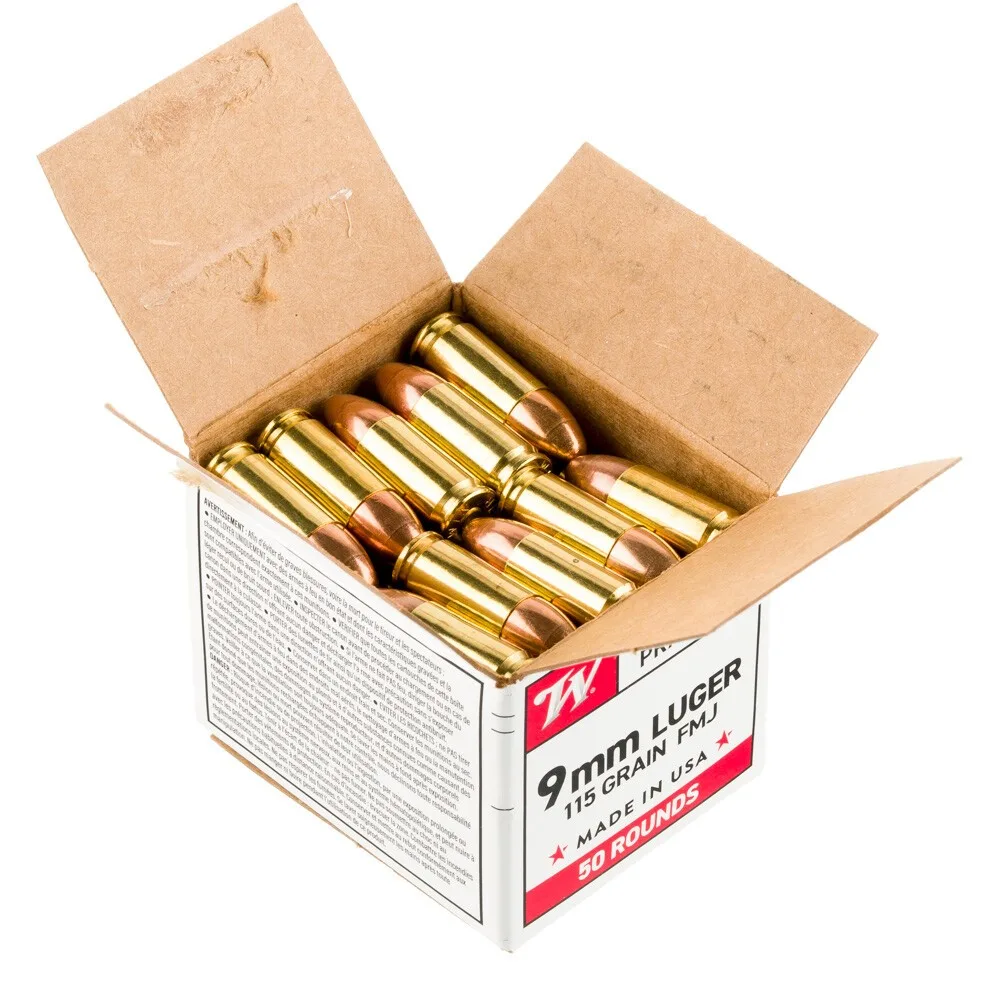
This weight is a crucial factor influencing everything from recoil to how effectively a bullet hits its target. Manufacturer specifications often list this, with common bullet weights for 9mm Luger, for instance, ranging from 115 to 147 grains. Knowing these weights helps you make informed choices for your specific needs, whether that's for hunting, sport shooting, or self-defense.
Quick Answer: Bullet Grain is a Unit of Weight
Bullet grain refers to the weight of a projectile, measured in a unit called a grain. A grain is a very small imperial measurement, with 7,000 grains making up one pound. This specific weight directly impacts a bullet's velocity, energy, recoil, and accuracy.
Core Explanation: Understanding the Weight of a Bullet
At its heart, "grain" is all about mass. It's the standard way the ammunition industry measures the weight of a bullet. Think of it like grams for smaller items or pounds for heavier ones, but grain is specific to things like gunpowder and bullets.
This unit of measurement is essential because a bullet's weight, or mass, is one of the primary factors dictating its ballistic performance.
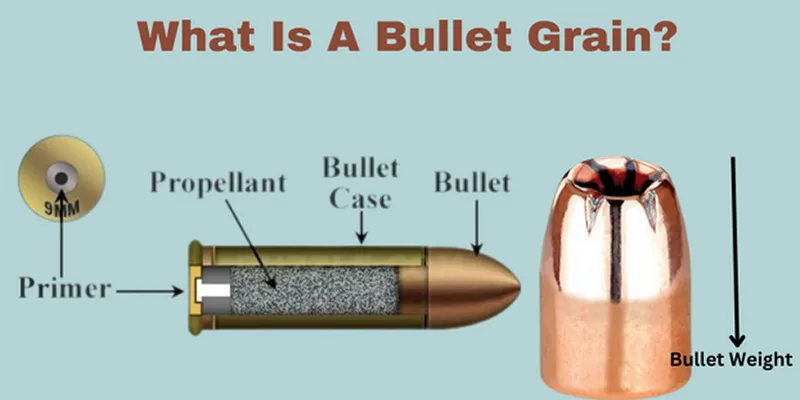
In the United States, the grain is an established unit for measuring components related to firearms. For example, manufacturer specifications for ammunition will always include the grain weight of the bullet. A common 9mm Luger round might be listed as 115 grains, while a heavier .308 Winchester bullet might be around 150 or 180 grains.
This simple number carries a lot of implications for how the bullet behaves once it leaves the barrel.
This weight influences how the bullet interacts with the air, how much energy it carries downrange, and how much force it transfers back to the shooter upon firing. Understanding grain weight is fundamental for anyone wanting to understand ammunition performance for any purpose.
Why Bullet Grain Matters: Performance Factors
The weight of a bullet, measured in grains, isn't just a number on a box; it's a critical performance determinant. It directly influences several key aspects of how a cartridge will behave when fired. When you're evaluating ammunition, paying attention to the grain weight is one of the first things you should do because it sets the stage for all other ballistic characteristics.
Recoil and Felt Shot
Heavier bullets, all else being equal within the same caliber, tend to produce less felt recoil than lighter bullets. This might seem counterintuitive, but it's a matter of physics. A heavier bullet carries more momentum.
When fired, this momentum works to counteract the rearward force of the expanding gases pushing the bullet forward. It’s like a heavier car having a smoother ride over bumps compared to a lighter one. For shooters, this means that a rifle firing a 180-grain bullet might feel softer on the shoulder than one firing a 150-grain bullet, even if both are in the same .30-06 Springfield caliber.
This reduced recoil can lead to better follow-up shots and improved accuracy for many shooters.
Velocity and Energy Transfer
Lighter bullets typically achieve higher velocities when fired from the same firearm compared to heavier bullets. This is because the same amount of gunpowder has less mass to push. Higher velocity means the bullet travels faster, which can influence its trajectory and the time it takes to reach the target.
However, velocity isn't the only story. Energy transfer, which is crucial for many applications like hunting, is a product of both mass and velocity. While a lighter bullet might be faster, a heavier bullet, even if slower, can often carry more energy downrange due to its greater mass.
The energy carried by a projectile is a key factor in its effectiveness upon impact.
Penetration and Expansion
The grain weight of a bullet plays a significant role in its ability to penetrate a target and how it expands upon impact. Generally, heavier bullets, especially those designed with construction for deep penetration, will typically penetrate more effectively than lighter, faster bullets. This is particularly important for hunting larger, tougher game where reaching vital organs requires significant penetration.
Conversely, lighter, faster bullets are often designed to expand more rapidly on impact. This rapid expansion creates a larger wound channel, which can be desirable for certain types of varmint hunting or self-defense scenarios where immediate incapacitation is a priority. The construction of the bullet itself, in conjunction with its weight, determines these terminal ballistics.
Accuracy and Firearm Match
Every firearm is, in a sense, a finely tuned instrument. For a specific firearm and barrel, there's often a "sweet spot" for bullet weight that yields the best accuracy. This optimal weight is influenced by the rifling twist rate in the barrel, the barrel's length, and the firearm's overall design.
A barrel with a faster twist rate, for example, is designed to stabilize heavier, longer bullets more effectively. If you shoot a bullet that is too light or too heavy for your rifle's twist rate, you might see reduced accuracy. Manufacturer specifications for rifles often recommend certain bullet weight ranges for optimal performance.
For instance, an AR-15 chambered in .223 Remington with a 1:7 twist might shoot 77-grain bullets more accurately than 55-grain bullets. Understanding this relationship is key for precision shooting.
Common Grain Weights by Caliber
Different calibers are designed to handle and perform best with specific ranges of bullet weights. While there can be overlap and specialized loads, understanding typical grain weights for common calibers gives you a good starting point. This isn't an exhaustive list, but it covers some of the most frequently encountered calibers and their typical bullet weights, which are crucial data points for any shooter or hunter.
| Caliber | Typical Bullet Weights (Grains) | Primary Use Cases |
|---|---|---|
| .22 LR | 30, 32, 40 | Plinking, small game hunting, beginner training |
| 9mm Luger | 115, 124, 147 | Self-defense, law enforcement, competitive shooting |
| .223 Remington / 5.56 NATO | 55, 62, 77 | Carbines, AR-style rifles, tactical applications |
| .308 Winchester / 7.62 NATO | 150, 168, 175 | Medium to large game hunting, precision shooting |
| .30-06 Springfield | 150, 180 | Versatile hunting rifle for medium to large game |
| .45 ACP | 230 | Handguns, self-defense, historical applications |
As of 2026, these grain weights remain standard across many manufacturers, though specialized loads can vary. For example, within the 9mm Luger category, a 115-grain bullet will typically be faster but may offer less penetration than a 147-grain bullet, which will be slower but carry more momentum. Choosing the right grain weight often comes down to matching the bullet's characteristics to the intended application and the firearm itself.
Choosing the Right Grain Weight for Your Needs
Deciding on the correct bullet grain weight is less about finding a single "best" and more about matching the bullet's properties to what you intend to do. It's a crucial step that significantly impacts effectiveness and safety for various shooting activities. Think of it as selecting the right tool for the job; a lighter, faster bullet might excel in one scenario, while a heavier, slower one is ideal for another.
Hunting Applications
For hunting, bullet grain selection is paramount and often dictated by the type of game you're pursuing. For smaller game, like squirrels or rabbits, lighter, faster bullets (e.g., 30-40 grain in .22 LR) are often preferred because they tend to expand rapidly, ensuring a quick and humane harvest. For medium-sized game, such as deer, mid-weight bullets (e.g., 150-grain in .308 Winchester or .30-06 Springfield) are a popular choice, offering a good balance of velocity, energy, and penetration.
When targeting larger, tougher animals like elk or bears, heavier bullets (e.g., 180-grain or even 200-grain in larger calibers) become more advantageous. These heavier projectiles are designed for deep penetration, ensuring vital organs can be reached even through thick hide and bone.
Self-Defense and Duty
In self-defense or law enforcement applications, the goal is often to achieve rapid incapacitation with controlled penetration. This typically means selecting bullets that will expand reliably upon hitting soft tissue. While lighter, faster bullets can expand quickly, there's a concern they might over-penetrate, posing a risk to bystanders.
Heavier bullets in calibers like 9mm Luger (e.g., 147-grain) are often chosen for their balance of adequate penetration and reduced risk of over-penetration compared to very light, high-velocity rounds. Ammunition designed for self-defense often uses expanding bullet designs, and the grain weight is a factor in how reliably and effectively that expansion occurs. Manufacturer specifications from companies like Federal Premium or Hornady provide detailed information on the terminal performance of their defensive rounds.
Target Shooting and Plinking
When you're just out shooting at the range for practice or plinking, grain weight often becomes a matter of preference, firearm compatibility, and cost. Lighter bullets are generally less expensive and produce less recoil, making them more comfortable for extended shooting sessions. For casual plinking with a .22 LR, the standard 32 or 40-grain loads are perfectly suitable.
For rifle shooting where precision is key, finding the most accurate load for your specific rifle is the priority. This might mean experimenting with different grain weights to see which one your rifle stabilizes best and shoots most accurately, as discussed by various firearm training resources. For example, a rifle with a fast twist rate might perform best with heavier bullets, contributing to tighter shot groups.
Bullet Grain Mistakes to Avoid
When selecting ammunition, understanding bullet grain is crucial, but several common missteps can lead to less-than-ideal results. Avoiding these pitfalls ensures you're using the right ammo for your firearm and application, leading to better performance and safety.
- Ignoring Firearm Specifications: Not all firearms are designed to shoot all bullet weights effectively. For example, a rifle with a slow rifling twist rate might struggle to stabilize very heavy bullets, leading to poor accuracy. Always check your firearm's manual or manufacturer's recommendations for recommended bullet grain ranges.
- Using the Wrong Grain for the Game: Taking a light varmint round to hunt large game is a recipe for failure. Conversely, using a heavy, deep-penetrating bullet on small game can sometimes result in excessive meat damage. Match the bullet's intended purpose to your quarry.
- Overlooking Recoil: While heavy bullets can reduce felt recoil, some heavy loads in certain calibers can still produce significant recoil. If you're sensitive to recoil, or training new shooters, choose a grain weight that minimizes discomfort for better control and accuracy.
- Assuming Faster is Always Better: High velocity isn't always the goal. For some applications, especially hunting or self-defense, a slower, heavier bullet might offer superior penetration and energy transfer. Velocity needs to be balanced with mass for the desired outcome.
- Ignoring Bullet Construction: Grain weight is just one factor. The construction of the bullet itself, whether it's full metal jacket (FMJ), soft point, hollow point, or other designs, significantly impacts its performance on impact. A 150-grain FMJ will behave very differently from a 150-grain soft point.
Frequently Asked Questions About Bullet Grain
What does bullet grain mean?
Bullet grain refers to the weight of a bullet, measured in a unit called "grain." This measurement is fundamental to understanding a bullet's ballistic performance, including its velocity, energy, and recoil.
Is a heavier or lighter bullet better?
Neither is inherently "better"; it depends entirely on the intended use. Lighter bullets are generally faster and can be good for small game or varmints, while heavier bullets often provide more energy and penetration for larger game or self-defense.
How does grain affect recoil?
Heavier bullets generally produce less felt recoil than lighter bullets of the same caliber because their increased momentum counteracts the forward thrust more effectively. This can make shooting more comfortable and improve accuracy for follow-up shots.
Can I shoot any grain weight in my firearm?
Not necessarily. Firearms, especially rifles, have rifling twist rates designed to stabilize specific bullet weights. Using a bullet that is too light or too heavy for your firearm's twist rate can lead to poor accuracy.
Always check your firearm's specifications.