What Is the Difference Between Boxer and Berdan Primers?
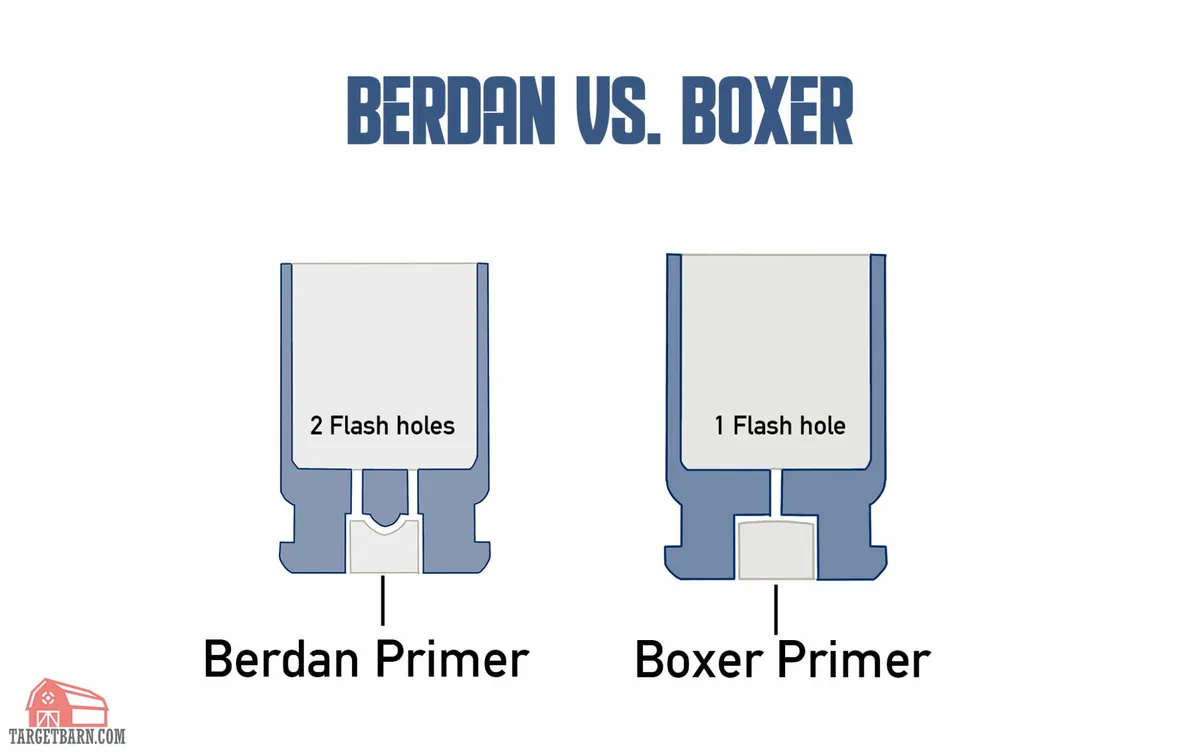
Image source: Bing (Web (fair-use with source credit))
Boxer vs. Berdan Primers: What’s the Real Difference for You?
If you're into shooting and especially if you're thinking about reloading your own ammunition, you've probably heard of boxer and Berdan primers. These small components are crucial for firing a cartridge, but they're not all the same. Understanding what is the difference between boxer and berdan primers can save you a lot of headaches, particularly when you're preparing cases for reloading.
The distinction between these two primer types primarily lies in their internal design and how that impacts their removal and replacement. For instance, boxer primers typically feature a self-contained anvil and a single flash hole. Berdan primers, however, often have the anvil integrated into the case itself, with two smaller flash holes.
This fundamental design difference affects everything from how easily spent primers are removed to the tools you'll need.
Quick Answer: How Primers Are Different
Boxer primers have a built-in anvil and a single flash hole. Berdan primers usually have the anvil formed in the case head. Boxer primers are easier to remove and replace for reloading.
Berdan primers are often harder to remove.
Boxer Primers: How They Work and Why They're Popular
Boxer primers are a very common type of primer, particularly prevalent in ammunition manufactured in North America. Their design is user-friendly for reloaders.
Boxer Primer Design
The defining characteristic of a boxer primer is the presence of a small, anvil (a metal post) that's part of the primer itself. When the firing pin strikes the primer, it crushes this anvil against the primer cup. This action ignites the priming compound.
Crucially, boxer primers also feature a single, centrally located flash hole in the case head. This hole allows the hot gases from the ignited primer to pass through and ignite the main powder charge in the cartridge case.
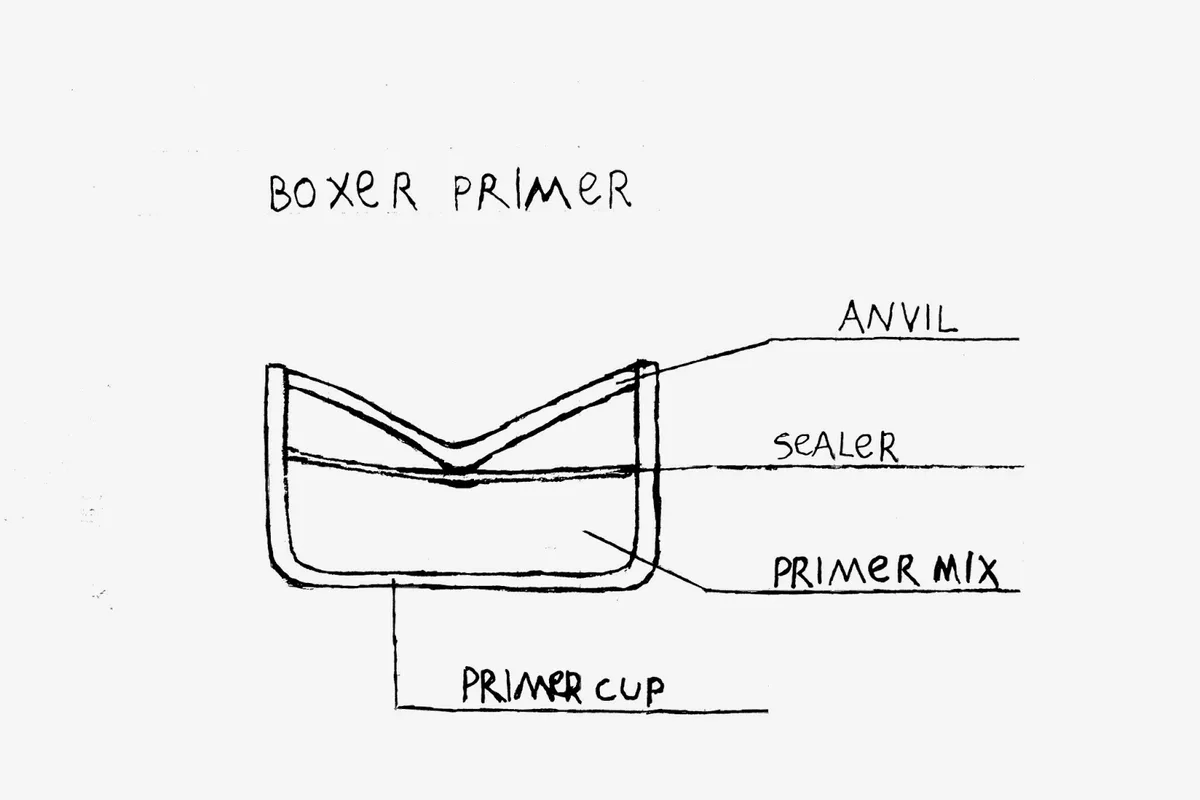
Image source: Bing (Web (fair-use with source credit))
This simple, integrated design makes them ideal for ammunition that's intended to be reloaded. The anvil is discarded along with the spent primer, and the single flash hole in the case is clear and accessible.
Boxer Primer Advantages for Reloading
For anyone who reloads their own ammunition, boxer primers are generally the preferred choice. The process of removing a spent boxer primer is straightforward. Standard de-capping dies, commonly found in reloading toolkits, easily push the spent primer and its integrated anvil out of the case through the center flash hole.
Once the pocket is clear, a new boxer primer can be seated. Manufacturer specifications for many common rifle and pistol cartridges, such as the SAAMI standards for .223 Remington, are based on the use of boxer primers. This widespread standardization means that finding replacement primers and compatible reloading tools is usually not a problem.
Berdan Primers: A Look at the Other Kind
Berdan primers are also widely used, though they are more common in ammunition originating from Europe or in older military surplus cartridges. Their design presents a different set of considerations, particularly for those involved in reloading.
Berdan Primer Design
The key distinction with Berdan primers is that the anvil is not part of the primer itself. Instead, the anvil is an integral part of the cartridge case's head. When the firing pin strikes the Berdan primer, the primer cup is forced down onto this built-in anvil within the case.
This crushes the priming compound and initiates ignition. Another significant difference is the flash hole arrangement. Berdan-primed cases typically feature two smaller flash holes, positioned on either side of the internal anvil.
These holes serve the same purpose as the single flash hole in boxer primers: allowing the ignition flame to reach the main powder charge.
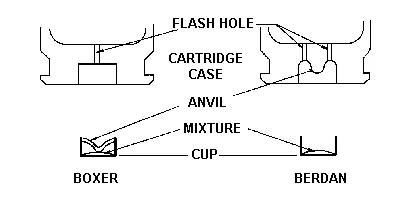
Image source: Bing (Web (fair-use with source credit))
This case-integrated anvil design means that the spent primer cannot be simply pushed out with a standard de-capping die.
Berdan Primer Challenges for Reloading
The integrated anvil in Berdan-primed cases makes spent primer removal a more involved process. Standard de-capping dies won't work because there's no central anvil to push against, and the primer is essentially swaged into place. To remove spent Berdan primers, specialized tools are often required.
These tools are designed to push the primer out from the inside of the case or to lever it out. However, this process can be difficult and time-consuming, and it's not always successful. Aggregate reviews from reloaders often report that removing stubborn Berdan primers can be a frustrating experience.
For this reason, many reloaders choose to avoid using Berdan-primed cases, or they may relegate them to projects where ease of reloading isn't a primary concern.
Direct Comparison: Boxer vs. Berdan Primers
Understanding the core differences is key, but seeing them side-by-side really clarifies why one might be better for certain tasks than the other, especially reloading.
Key Differences at a Glance
| Feature | Boxer Primers | Berdan Primers |
|---|---|---|
| Anvil Location | Built into the primer itself. | Built into the cartridge case head. |
| Flash Holes | One, centrally located. | Typically two, on either side of the internal anvil. |
| Primer Removal | Easy with standard de-capping dies. | Difficult; requires specialized tools. |
| Reloading Ease | High; designed for ease of replacement. | Low; often considered impractical or labor-intensive. |
| Common Origin | North America. | Europe; also older military surplus. |
| Component Type | Primer includes anvil; case requires flash hole. | Case includes anvil; primer is just the cup of compound. |
Which Primer Type for Which Ammo?
Generally speaking, most modern, commercially produced ammunition intended for civilian use in North America, like common hunting or self-defense cartridges, uses boxer primers. This includes popular rounds such as 9mm Luger.45 ACP.223 Remington, and .308 Winchester.
Berdan primers are more frequently encountered in older military surplus ammunition or certain imported centerfire cartridges. Examples might include some variants of 7.62x39mm, 7.62x54R, or older European rifle calibers. If you're purchasing brass from surplus lots or reloading components from overseas, it's wise to inspect them carefully to determine primer type.
Reloading with Boxer vs. Berdan Brass: What to Expect
The choice between boxer and Berdan primed brass has significant implications if you're looking to reload your ammunition. The ease of processing cases varies dramatically.
The Reloading Process for Boxer Brass
Reloading with boxer-primed brass is generally a smooth and efficient process. The first step after firing is de-capping, where a standard de-capping die is used to punch out the spent boxer primer. This is typically a quick and easy operation, as the die simply pushes the primer out through the single, centered flash hole.
Once the pocket is clear of the spent primer and anvil, the case is ready for resizing and priming. Seating a new boxer primer is accomplished using a priming tool, which presses the new primer into the pocket until it's flush with the case head. The entire process is well-documented and supported by a wide range of reloading equipment.
The Reloading Process for Berdan Brass
Reloading Berdan-primed brass presents more of a challenge. The primary hurdle is removing the spent Berdan primer. Because the anvil is part of the case, standard de-capping dies are ineffective.
Reloaders often need specialized tools, such as primer pullers or case-neck de-priming tools designed for Berdan cases. These can be fiddly to use, and sometimes the spent primer is difficult to dislodge due to crimps or sealant.
Even after successfully removing the spent primer, not all Berdan-primed cases are ideal for reloading. Some military cartridges feature crimped primers or primer pockets that have been sealed, which adds further complexity to the process. While it is possible to reload Berdan brass, it requires more effort, specialized tools, and often a greater degree of patience.
Why Reloaders Often Prefer Boxer
The overwhelming preference for boxer-primed brass among reloaders stems from its inherent ease of processing. The straightforward de-capping and priming steps significantly reduce the time and effort required to prepare cases for reloading. This efficiency is crucial for reloaders who process large volumes of brass.
Furthermore, the widespread availability of boxer primers from various manufacturers means that reloaders have ample choice in terms of primer type and performance characteristics. Manufacturer specifications, such as those published by the Sporting Arms and Ammunition Manufacturers' Institute (SAAMI), are readily available for most popular boxer-primed cartridges. This predictability and availability make boxer-primed brass the go-to choice for most handloaders.
Common Mistakes When Dealing with Primers
When working with ammunition components, whether just observing or actively reloading, certain mistakes can arise from not fully understanding the differences between boxer and Berdan primers. One common error is assuming all spent brass is equally easy to reload. If you pick up mixed brass at a range, it's crucial to identify whether it's boxer or Berdan primed before investing time and effort.
Attempting to de-cap Berdan brass with standard boxer-primer dies will likely result in frustration, damaged dies, or bent case rims.
Another mistake is not having the right tools for Berdan primer removal if you encounter it. Standard de-capping dies simply won't work. Trying to force them can damage your press or the die itself.
It's also important to recognize that some Berdan-primed cases have crimped primers, which requires an additional step to remove before a new primer can be seated. Ignoring this can lead to primers not seating fully or creating dangerous pressure issues.
Frequently Asked Questions About Primers
What does "primed brass" mean?
Primed brass refers to cartridge cases that have a primer installed, ready to be loaded with powder and a bullet to create a functional cartridge.
Can you convert Berdan-primed brass to Boxer-primed brass?
Generally, no. The internal anvil is part of the Berdan case itself. While some specialized kits and modifications exist to drill out the anvil and ream the flash holes, it's a complex and often unreliable process.
Most reloaders find it far more practical to acquire boxer-primed brass for reloading.
Are Berdan primers less reliable than Boxer primers?
No, not necessarily. Both primer types are designed to function reliably when manufactured correctly. The difference isn't in inherent reliability but in the ease of post-firing processing, especially for handloaders.
What if I accidentally buy the wrong type of primers?
If you purchased new primers and realized they are the wrong type (e.g., bought Berdan primers when you need Boxer), they are usually non-returnable once opened. For spent brass, the identification happens before you start reloading, so the mistake is in collection or processing, not primer purchase.
How can I tell if brass is boxer or Berdan primed?
The easiest way is to look at the flash hole on the case head. Boxer primers have one, large, centered flash hole. Berdan primers typically have two smaller flash holes, often located on opposite sides of the case head, flanking the integrated anvil.
Your Next Steps: Choosing or Identifying Primed Brass
For most shooters, especially those new to reloading, sticking with readily available boxer-primed brass is the most straightforward path. It simplifies the reloading process, reduces the need for specialized tools, and minimizes potential frustration. When acquiring used brass, take a moment to inspect the case heads.
A quick glance at the flash hole configuration is usually enough to determine if it's boxer or Berdan.
If you encounter Berdan-primed brass, unless you have a specific reason or the necessary tools and patience for its more complex processing, it's often best to set it aside. Focus your reloading efforts on boxer-primed cases to ensure a more efficient, enjoyable, and less problematic experience. This careful identification and selection will make your reloading journey much smoother.