What Does MOA Mean When Discussing Ammunition?
When you're looking at ammunition, you'll often see it described using "MOA." But what does MOA mean when discussing ammunition, and why should you care about it? Understanding this term is key to knowing how accurately a particular round can perform from your firearm.
MOA, which stands for Minute of Angle, is a way to measure the precision of a bullet's flight. It’s a standard used across the industry, with major organizations like the Sporting Arms and Ammunition Manufacturers' Institute (SAAMI) defining its use in firearm and ammunition specifications. Essentially, it helps predict how tight a group of shots you can expect to get at a specific distance.
Quick Answer
MOA means Minute of Angle, a unit used to measure the accuracy of ammunition and firearms. One MOA at 100 yards translates to roughly 1.047 inches of spread. It quantizes potential bullet dispersion from a stable platform.
This allows shooters to compare potential accuracy between different ammunition loads.
Understanding MOA in Ammunition: Your Accuracy Compass
So, what exactly is a Minute of Angle? Think of it like slicing a pie into 360 pieces to make a full circle. Then, you take one of those slices and divide that into 60 even smaller pieces.
Each one of those tiny pieces is a Minute of Angle.
When we talk about ammunition and firearms, this angular measurement is used to describe how much a bullet might deviate from its intended point of aim. It’s a way to quantify potential accuracy, especially at longer distances. Manufacturer specifications often rate ammunition or firearms for their potential to achieve a certain MOA.
For example, a rifle might be guaranteed to shoot sub-MOA, meaning its groups are less than one Minute of Angle at 100 yards.
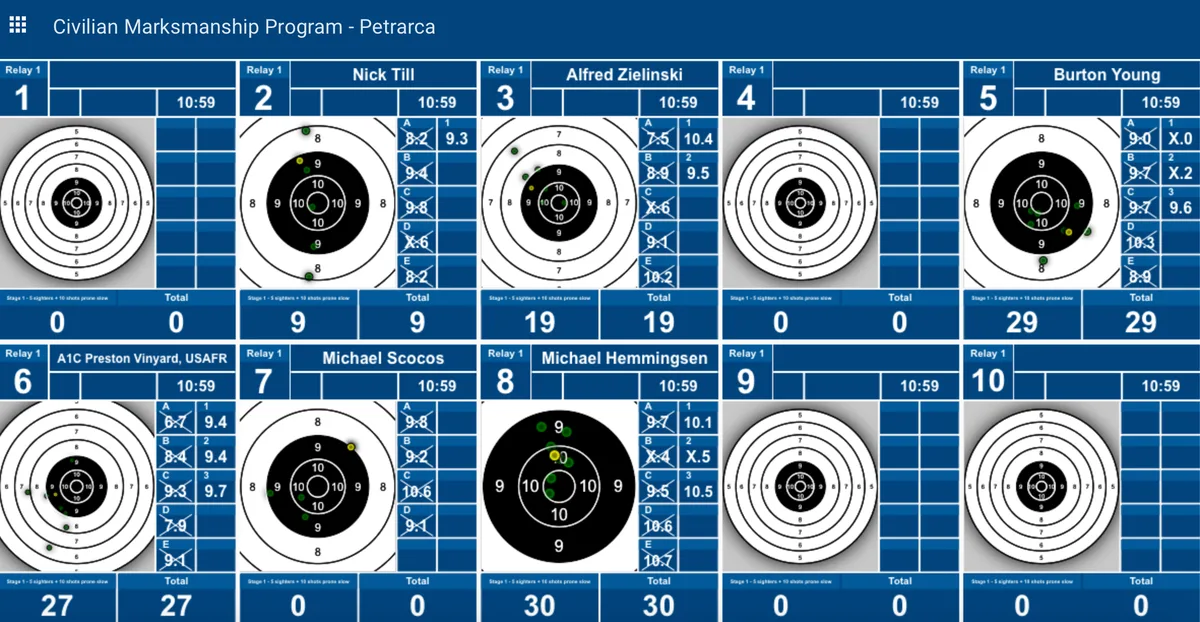
Measuring Bullet Spread: How MOA Translates to Group Size
While MOA is an angle, we typically translate it into a tangible measurement of inches or centimeters on a target. The conversion isn't perfectly round, but for practical purposes, shooters often use a simplified rule of thumb: 1 MOA equals approximately one inch at 100 yards. However, the precise figure, as established by industry standards, is closer to 1.047 inches at 100 yards.
This means if a box of ammunition is rated at 1 MOA, the manufacturer is stating that, under ideal conditions from a properly functioning rifle, you should be able to keep all your shots within a circle roughly 1.047 inches in diameter at 100 yards. As the distance increases, so does the size of that circle. At 200 yards, 1 MOA translates to about 2.094 inches, and at 300 yards, it's approximately 3.141 inches.
This practical application is crucial for hunters and competitive shooters alike. Knowing the MOA rating helps you predict how tight your groups will be at the ranges you intend to shoot.
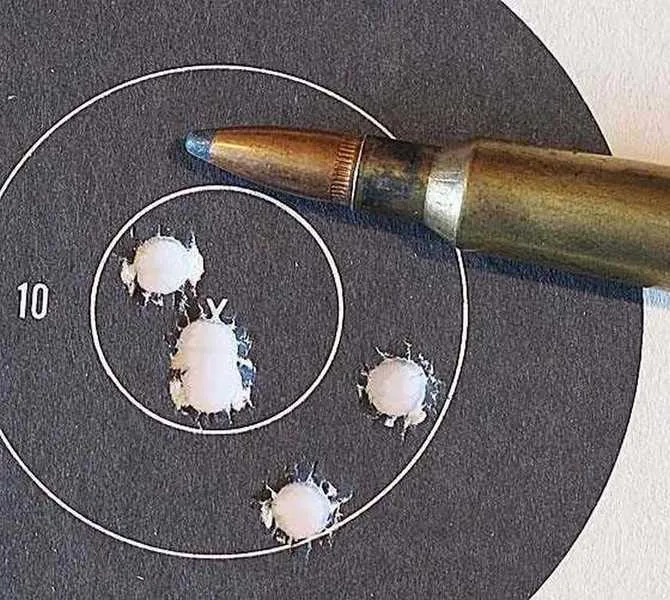
What does MOA mean at different distances?
- 100 yards: ~1.047 inches
- 200 yards: ~2.094 inches
- 300 yards: ~3.141 inches
- 500 yards: ~5.235 inches
Why is this conversion important?
It helps you visualize the actual target size you're aiming for and understand the precision required.
MOA vs. MRAD: Which Metric Fits Your Shooting Style?
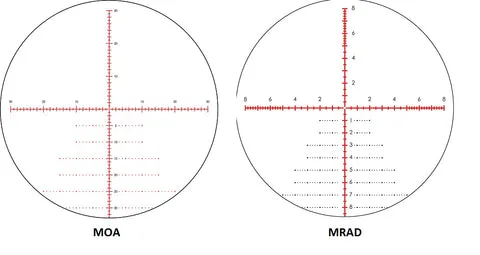
You'll often hear MOA discussed alongside another similar measurement: MRAD, or Milliradian. Both are angular measurements used to quantify accuracy, but they operate on different systems. While MOA is based on degrees (an imperial system measurement), MRAD is based on radians (a metric system measurement).
Here's a quick breakdown:
- MOA: One MOA is about 1/60th of a degree.
- MRAD: One MRAD is about 1/1000th of a radian.
The practical difference lies in their conversion to linear measurements on a target.
- 1 MOA is roughly 1 inch at 100 yards (or 2.54 cm at 100 meters).
- 1 MRAD is roughly 3.6 inches at 100 yards (or 10 cm at 100 meters).
Who prefers which?
- MOA: Traditionally favored in the United States, often found on older scopes and firearms. Shooters familiar with imperial measurements might find MOA more intuitive.
- MRAD: More common in military and competitive shooting circles globally, and gaining traction in civilian markets. Its direct metric conversion (10 cm at 100m) can be easier for some to work with, especially when adjusting scope turrets.
Many modern scopes offer adjustments in either MOA or MRAD, and the choice often comes down to personal preference and what you're used to.
How Different Factors Impact Ammunition MOA
It's important to remember that an ammunition's MOA rating is a theoretical maximum under ideal conditions, often stated by the manufacturer. In the real world, achieving that specific MOA is influenced by a variety of factors. Your firearm, the environmental conditions, and even how you shoot can all affect the actual group size you get.
Here are some key players that impact how well ammunition performs against its stated MOA:
- The Firearm: The quality of the barrel, the action, the rifle's bedding, and the overall condition of your firearm are paramount. A rifle that isn't inherently accurate won't magically shoot sub-MOA just because you feed it high-quality ammo. The firearm must be capable of consistent shot placement.
- Environmental Conditions: Wind is a huge factor, especially at longer ranges. Temperature, humidity, and even atmospheric pressure can subtly affect bullet flight. Strong winds can easily blow a shot wide, turning a potential sub-MOA group into something much larger.
- Ammunition Consistency: Not all rounds in a box are identical. Slight variations in bullet weight, powder charge, primer consistency, or case dimensions can lead to increased dispersion. This is why premium ammunition brands often emphasize their quality control.
- Shooting Technique: How you hold the rifle, trigger control, sight picture, and follow-through all play a critical role. Jerking the trigger or inconsistent body position will negate the inherent accuracy of even the best ammunition.
Choosing Ammo Based on MOA for Your Firearm
When you're looking to buy new ammunition, understanding the MOA rating can help you make a more informed choice, especially if you own a precision rifle. If your rifle is consistently shooting 2-inch groups at 100 yards, there's likely little benefit to buying ammunition that claims sub-MOA performance. Conversely, if you have a high-quality rifle known for its accuracy, using ammunition rated for better MOA could potentially unlock its full potential.
Consider your intended use:
- For Hunting: If you're hunting medium to large game at moderate distances (say, under 300 yards), ammunition rated for 1 to 1.5 MOA is often perfectly adequate. You need a load that's reliable and accurate enough for a clean ethical shot.
- For Precision Shooting & Long Range: For competitive shooting or reaching out to 500 yards and beyond, you'll want ammunition that boasts sub-MOA or even sub-half-MOA (0.5 MOA) ratings. The tighter the grouping, the better your chances of hitting small targets or vital zones at extreme distances.
- For General Practice: For plinking or basic marksmanship practice, the absolute tightest MOA isn't usually the top priority. Reliable function and reasonable accuracy are typically sufficient, and you can often find more economical options.
Ultimately, the best MOA for you depends on your specific firearm's capabilities and your shooting goals. It's always a good idea to test different loads from reputable manufacturers in your rifle to see which performs best. Manufacturer specifications are a starting point, but real-world results can vary.